
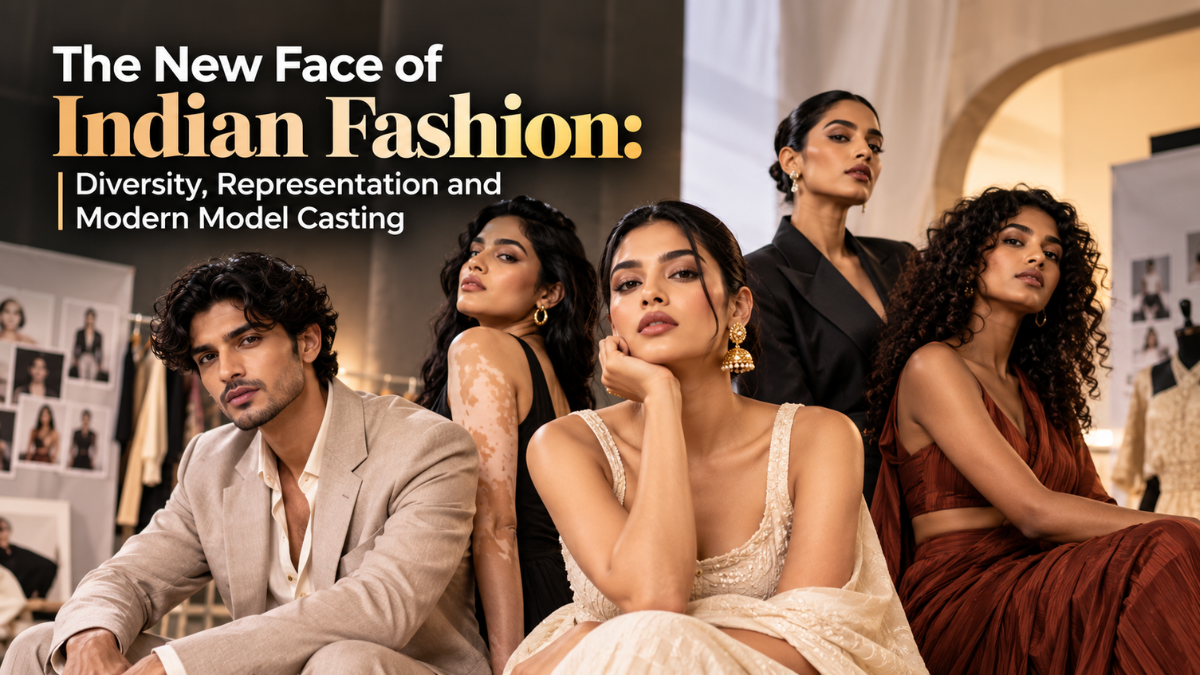
Indian fashion has always been diverse. From regional textiles and traditional clothing to contemporary streetwear and luxury fashion, the country’s fashion landscape reflects a wide range of cultures, aesthetics and identities.
Today, that diversity is increasingly visible in fashion campaigns, ecommerce photography, advertising and digital content.
For brands, model casting is no longer simply about finding someone who looks good in a particular outfit. Modern campaigns often require talent that can connect with a specific audience, represent the personality of a brand and work across different visual formats.
This has made diversity and thoughtful model casting increasingly relevant to the fashion and commercial modelling industry.
What Does Diversity in Fashion Modelling Mean?
Diversity in modelling can refer to many different aspects of representation.
Depending on the campaign, brands may consider:
- Different skin tones
- Different body types
- Different age groups
- Different cultural backgrounds
- Different personal styles
- Different physical features
- Different gender expressions
- Different levels of modelling experience
The purpose is not simply to include different people for the sake of appearance.
Good casting starts with understanding who the brand wants to communicate with and selecting talent that is appropriate for the campaign.
For example, a clothing brand targeting young urban consumers may have different casting requirements from a traditional ethnic-wear label or a premium jewellery brand.
Why Representation Matters to Fashion Brands
Fashion is closely connected to identity.
Customers often want to imagine how a product could look on them before making a purchase. Seeing products presented by people with different appearances and styles can provide a broader visual reference.
This is particularly relevant for ecommerce. A product photograph is not only showing an item. It is also communicating how that item looks when worn or used. For brands, thoughtful casting can therefore become part of the overall customer experience.
Traditional fashion imagery has sometimes relied on a relatively narrow definition of what a fashion model should look like. Modern commercial campaigns can take a broader approach, as brands selling directly to consumers may need talent that reflects the variety of people who actually purchase their products.
This does not mean that traditional fashion aesthetics are disappearing. Editorial, runway and luxury campaigns may continue to have specific creative requirements. Instead, the modelling industry is becoming more varied, with different types of talent suited to different types of campaigns.
Fashion Casting vs Commercial Casting vs Lifestyle Casting
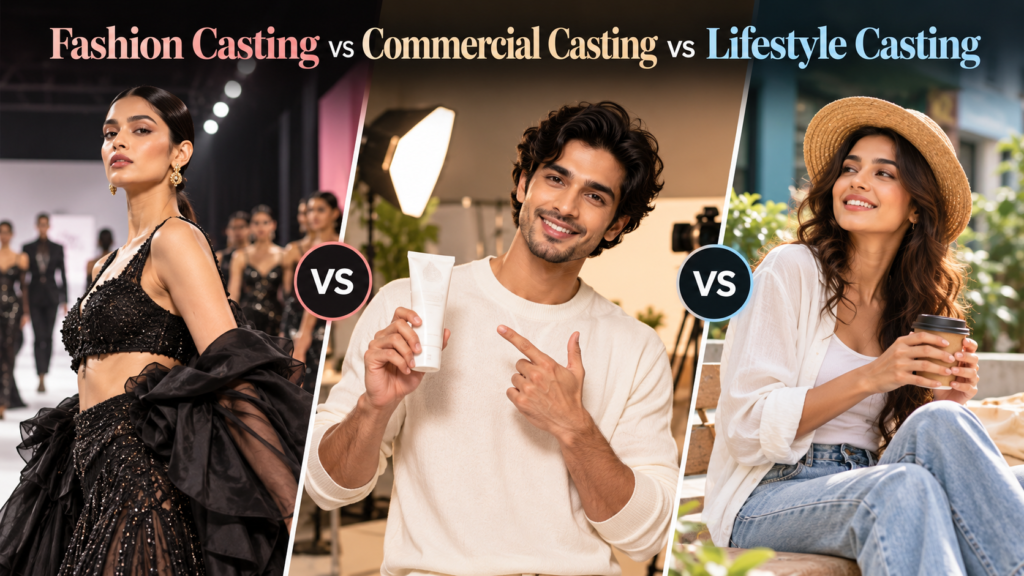
One important aspect of modern modelling is understanding that there is no single definition of the “right” model.
Fashion Modelling
Fashion modelling may involve runway shows, designer campaigns, fashion editorials, lookbooks, luxury campaigns and fashion publications. Casting can be highly specific depending on the creative direction of the designer or photographer.
Commercial Modelling
Commercial modelling often focuses on connecting products with everyday consumers. It can include ecommerce, advertising, lifestyle campaigns, social media content, retail campaigns, product photography and digital advertisements. Here, relatability, camera presence and the ability to communicate a product can be particularly important.
Lifestyle Modelling
Lifestyle campaigns often require models to appear natural in everyday situations. The model may need to interact with other people, use a product naturally, show different emotions, move comfortably, follow a storyline and work naturally in video. This makes personality and adaptability important parts of casting.
How Brands Should Approach Modern Model Casting
Casting is an important part of campaign planning. Before selecting talent, brands should consider a few key questions.
Who is the target customer?
Understanding the intended audience helps establish the overall direction of the campaign.
What is the product?
A jewellery campaign may need a different model profile from a sportswear or ethnic-fashion campaign.
Where will the content appear?
A runway show, ecommerce website, Instagram Reel and television advertisement can all require different types of talent.
What should the campaign communicate?
The model should complement the campaign’s visual identity rather than distract from the product.
An important part of this process is maintaining a balance between representation and creative direction. Brands should not select models simply because they fit a diversity checklist. Instead, casting should be based on the campaign’s genuine requirements while creating opportunities for a wider range of talent. The best casting decisions consider brand identity, product category, target audience, campaign concept, content format, the model’s skills and the overall visual direction. This creates a more authentic campaign.
Ecommerce Is Reshaping Model Casting
The growth of ecommerce has created another important area for commercial modelling. Customers increasingly discover fashion products through websites, social media and digital advertisements.
For an ecommerce brand, models may need to demonstrate clothing or products clearly while also producing content suitable for social platforms. This means casting may consider both appearance and practical skills, as a model may need to work comfortably with product photography, multiple poses, short-form video, reels, lifestyle content, different camera angles and product demonstrations. The modern ecommerce model therefore needs to be adaptable.
Authenticity and the Role of AI in Modelling
Consumers are exposed to an enormous amount of visual content every day. As a result, brands are increasingly looking for ways to make their campaigns feel relevant and authentic.
Authenticity does not mean that every fashion campaign needs to look casual or unedited. Instead, it can mean that the people, styling and visual storytelling feel appropriate for the brand and its audience. The model plays an important role in creating that connection.
Artificial intelligence is also becoming part of fashion’s visual ecosystem. Brands can now experiment with AI-generated images, virtual models and digitally enhanced content. These technologies can be useful for creative experimentation and certain forms of digital content.
However, real models continue to provide something technology cannot simply replace: a human presence that can interact naturally with products, photographers, directors and other people on set. For many fashion and commercial campaigns, real human talent remains an important part of visual storytelling. The future may not be about choosing between technology and human models. Instead, brands may increasingly use technology alongside professional talent.
What Brands Should Look for in a Model
When casting for a campaign, brands should look beyond a portfolio photograph.
Camera Presence
Can the model appear natural and confident in front of the camera?
Versatility
Can the model adapt to different outfits, concepts and campaign styles?
Expression
Can they communicate the desired emotion without appearing unnatural?
Movement
Can they pose, walk and interact naturally with products?
Professionalism
Can they work reliably with photographers, stylists, directors and brand teams?
Brand Fit
Does the model’s overall presence suit the brand and its audience?
These qualities can be particularly valuable for commercial and digital campaigns.
Why Work With a Modelling Agency in Mumbai
Mumbai is an important centre for India’s fashion, advertising, entertainment and media industries. For brands planning professional campaigns in the city, a modelling agency in Mumbai can provide access to a broader range of talent and help simplify the casting process.
Instead of searching for individual models independently, brands can communicate their campaign requirements and explore talent suited to the project. This can be useful for fashion labels, ecommerce businesses, advertising agencies, photographers and lifestyle brands.
RJ Talents is a modelling agency in Mumbai helping brands find modelling talent for fashion, ecommerce, advertising and commercial campaigns. Every campaign has different requirements. A designer collection may need fashion-focused talent. An ecommerce brand may need models who can confidently present products on camera. A lifestyle campaign may require natural expressions and strong communication through body language.
RJ Talents can help brands explore modelling talent according to their campaign requirements rather than treating every project in the same way. The goal of effective casting is simple: find talent that fits the product, campaign and audience.
Also Read :- How to Spot a Genuine Modeling Agency in India
The Future of Indian Fashion Modelling
The Indian fashion industry is becoming increasingly connected to ecommerce, social media, creator culture and digital advertising. This is changing how brands present products and how models work.
The modern model may be expected to participate in a photoshoot, create short-form video, work with different styling concepts and represent a brand across multiple digital platforms. At the same time, diversity and representation are creating opportunities for a broader range of talent. The result is a modelling landscape that is becoming more varied and commercially focused.
Final Thoughts
The future of fashion casting is not about finding one definition of the “perfect” model. It is about finding the right person for the right campaign.
As Indian brands reach increasingly diverse audiences, thoughtful casting can help fashion campaigns become more relevant, relatable and visually distinctive. For brands, the process begins with understanding the campaign’s purpose, audience and creative direction. For models, it means developing skills beyond appearance, including camera confidence, versatility, professionalism, expression and the ability to adapt to different forms of content.
And for brands looking for professional talent in Mumbai, working with an experienced modelling agency can make the casting process more structured and efficient.
Frequently Asked Questions
Why is diversity becoming more important in fashion model casting?
Brands are increasingly selling to a wider range of customers, and casting that reflects this variety helps people better picture a product on themselves. It also makes campaigns feel more relatable across different platforms, from ecommerce to social media.
What’s the difference between fashion modelling and commercial modelling?
Fashion modelling typically involves runway shows, designer campaigns and editorials, where casting follows a specific creative direction. Commercial modelling focuses on connecting products with everyday consumers through ecommerce, advertising and lifestyle content, where relatability often matters more than a particular look.
Does hiring diverse talent mean brand identity takes a back seat?
No. Good casting still starts with the brand’s identity, product and audience. Diversity works best when it’s part of a genuine casting decision, not a checklist applied separately from the creative direction.
Will AI-generated models replace real models in fashion campaigns?
Not in the near future. AI can support certain types of digital content and creative experimentation, but real models still bring a human presence that technology can’t fully replace, especially for photoshoots, videos and in-person brand activations.
How can a modelling agency in Mumbai help with casting for ecommerce or lifestyle campaigns?
An agency can match talent to the specific needs of a campaign, whether that’s product demonstration skills for ecommerce or natural expression for lifestyle content, rather than brands having to search for individual models on their own.